ServicesCrowns & Bridges
Crowns & Bridges in Sutton, MA
A crown caps a tooth that is too cracked or too heavily filled to hold together on its own. A bridge fills the gap left by a missing tooth. We explain why your tooth needs one, which material fits, and what your insurance will and will not cover.
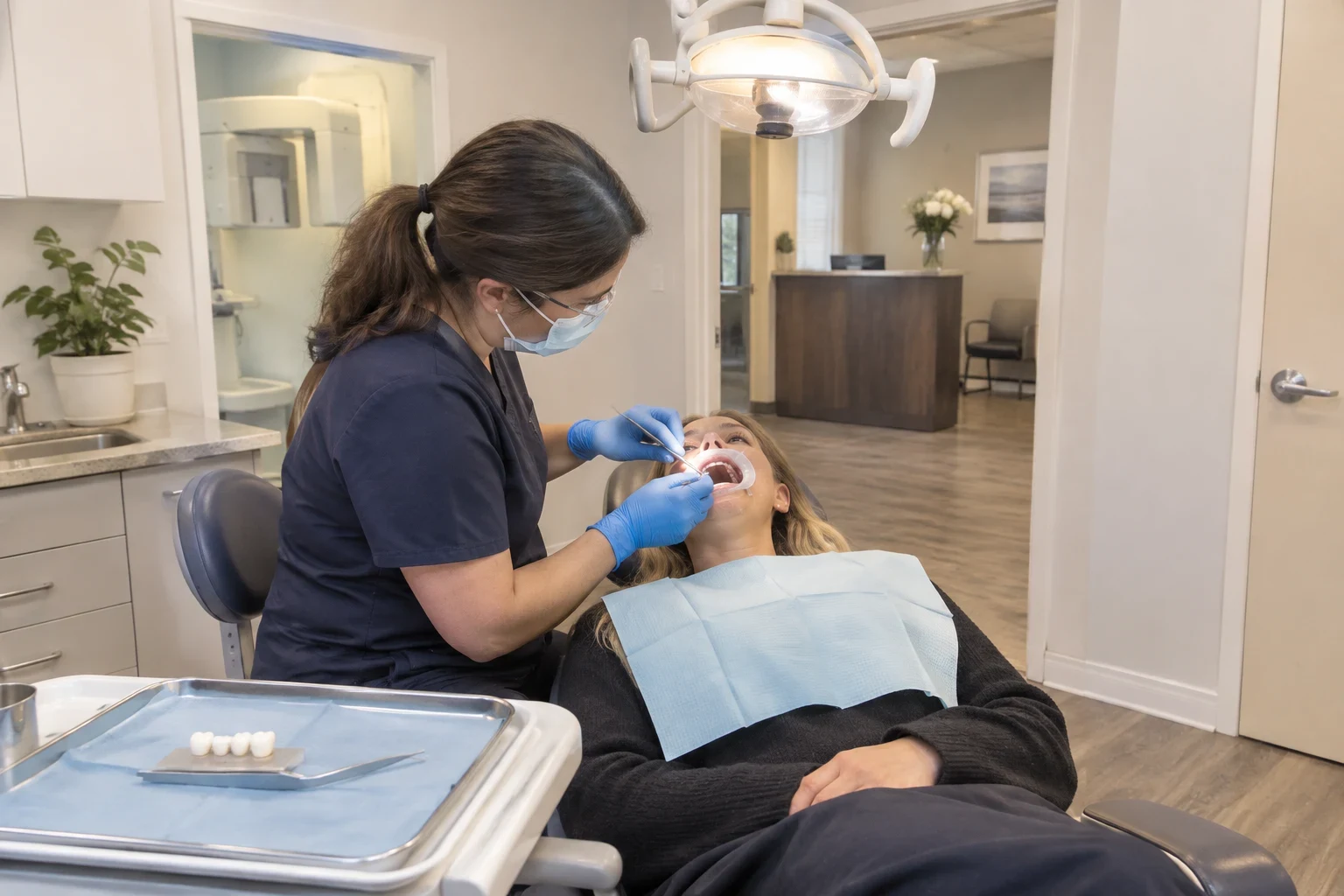
When a filling is no longer enough
A filling replaces a small amount of lost tooth structure and relies on the surrounding walls for strength. Once decay, a crack or an old filling has taken out roughly half of a tooth, those walls start to flex under biting force and can split. A crown covers the whole visible tooth and holds it together, much like a band around a barrel.
A bridge solves a different problem. When a tooth is missing, the neighbors drift and tip into the space and the opposing tooth can grow down toward it, which throws off your bite. A bridge uses crowns on the teeth beside the gap, called abutments, to support a false tooth, called a pontic, in between.
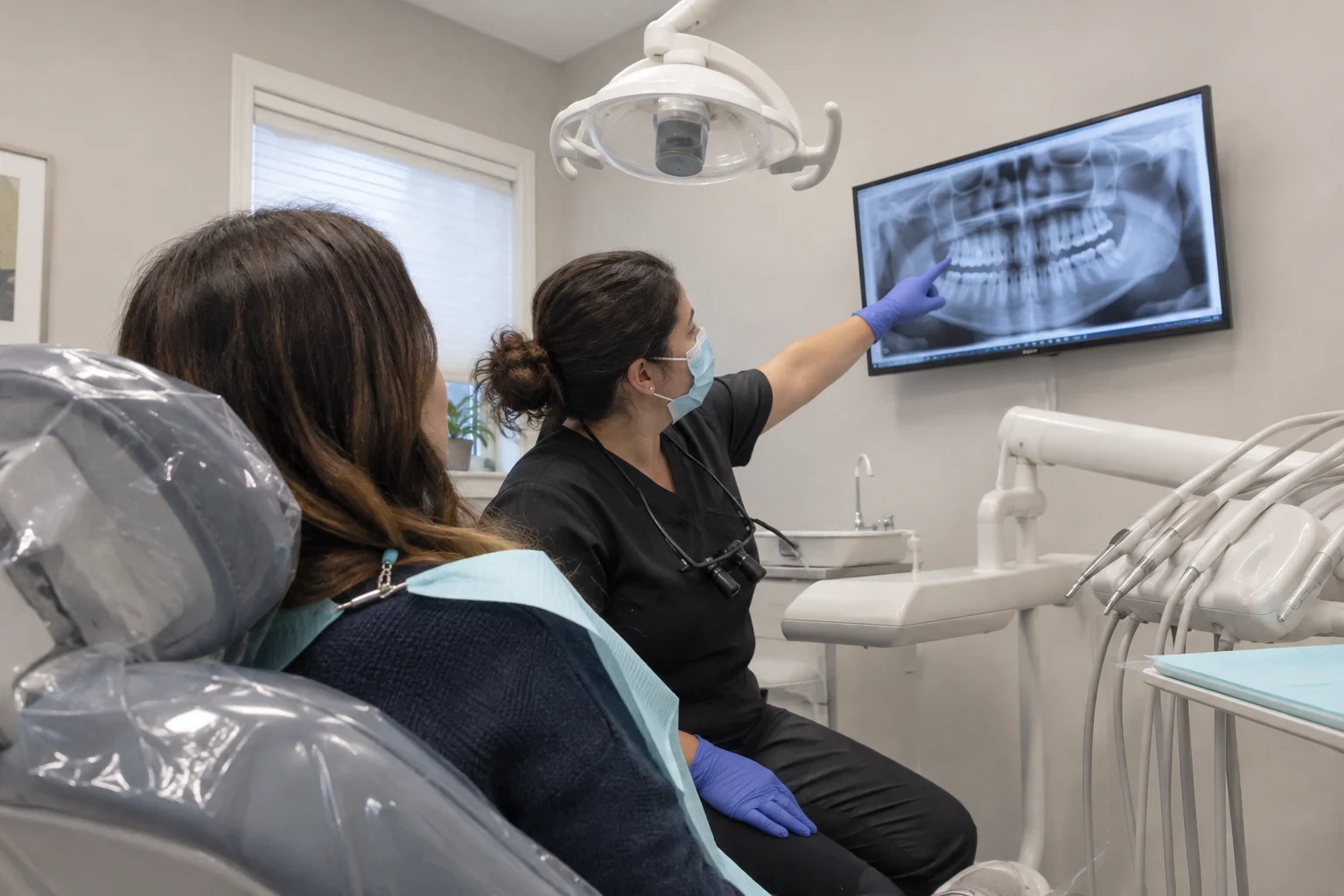
We also explain the rules that shape the decision in plain terms: what the X-rays show, why a tooth qualifies for a crown rather than a filling, and how insurance plans decide what they will pay for. You get the reasoning before you agree to anything.
What comes with your crown or bridge
- 01
We start with an exam and X-rays
We check the tooth, its root and the bone around it before planning anything. A new crown will fail on top of an untreated infection or a weak root, so the foundation must be sound first.
- 02
The right material for each tooth
For front teeth, lithium disilicate or layered porcelain works well because of the way light passes through it. Molars do the heavy chewing, so zirconia or a metal-based crown tends to last better there. We tell you why we chose it.
- 03
Accurate impressions and a matched shade
The lab builds your crown or bridge from impressions of the prepared tooth and the teeth it bites against. We choose the shade in normal light so it blends with the teeth beside it.
- 04
A temporary to guard the tooth
While the lab works, an acrylic temporary sits over the prepared tooth. It keeps the tooth from moving and shields it from cold and chewing pressure.
- 05
Fine-tuning your bite on fitting day
Before cementing, we check the contacts with floss and mark your bite with articulating paper. A crown that sits even a little high can make the tooth sore, so we adjust until your teeth come together evenly.
Questions about Crowns & Bridges?
Call(508) 691-2717When a crown or bridge may make sense
A sharp twinge as you bite
Sudden pain the moment you let go of a bite often points to a cracked tooth. A crown binds the tooth together and stops the crack from running toward the root.
A big filling that keeps failing
Silver fillings swell and shrink with hot and cold over many years. Once the enamel around them chips away, there may not be enough tooth left to support another filling.
A root-canal-treated tooth
Back teeth treated with a root canal become more brittle over time. A crown is usually our advice so chewing doesn't split them.
A space where a tooth used to be
Once a tooth is lost or pulled, its neighbors can tilt into the gap. A bridge fills the space and keeps your bite steady.
Teeth worn short or flat
Grinding wears away enamel down to the softer layer below. Crowns can restore the height and shape that your bite relies on.
How the visits work
- 1
Consultation and treatment plan
We look at the tooth, take X-rays and go over your choices, including whether a big filling might still do the job. You go home with a written plan that lists every step.
- 2
Preparation visit
Once the area is numb, we reshape the tooth so the crown can sit at the right thickness. For a bridge, both abutment teeth are prepared. Then we take impressions and fit your temporary.
- 3
Lab fabrication
The dental lab mills or builds up your crown or bridge to match the impression and shade we provide, which usually takes a couple of weeks.
- 4
Fitting and cementing
We take off the temporary, try the finished piece and check the fit, contacts and bite. When it is right, we bond or cement it in and show you how to floss around it, under a bridge too.
What sets the price of a crown or bridge
No single price fits every crown, since each patient's tooth and chosen material are different. Before we start, you get an itemized treatment plan listing every step. We accept most dental insurance plans. If you are uninsured, ask about our Office Dental Plan, or break the cost into smaller payments through the CareCredit Patient Payment Plan.
- Which material
- Lab fees differ for full zirconia, lithium disilicate, porcelain fused to metal and gold. The best choice depends on where the tooth sits and how much force your bite puts on it.
- Repair beneath the crown
- If a tooth is missing too much structure, a core buildup gives the crown a base to rest on. Some teeth need a root canal first, which is billed as its own procedure.
- How many units
- Bridges are priced per unit. A three-unit bridge is two crowns supporting one pontic, and a wider gap takes more units.
- Your plan's limits
- Many plans pay a set percentage toward a crown, cap payments at a yearly maximum and replace a crown only after a certain number of years. We go over your plan's limits so the numbers make sense up front.
Questions about crowns and bridges
Is getting a crown painful?
The tooth is completely numb before we shape it, so most patients feel pressure rather than pain. Nearby gums may be a little tender for a few days, and an over-the-counter pain reliever usually handles it.
How many years does a crown last?
It depends on the material, how well you clean at its edge and whether you grind or clench. Decay usually starts where crown and tooth meet, so regular exams and cleanings let us catch problems along that edge early.
Is a bridge or an implant better for me?
A bridge rests on the teeth beside the gap, and those teeth must be shaped for crowns. That makes sense when they already have large fillings. If those neighbors are healthy and untouched, we talk through the trade-offs with you first.
Does insurance help pay for a crown?
Plenty of plans contribute when a crown is clearly needed, such as for a broken tooth or deep decay. Some require X-rays before approval and may only pay for a less expensive material. We let you know what your plan is likely to need so your share is clear ahead of time.
Can I eat with a temporary crown on?
Mostly, with some care. Avoid gum, caramel and other sticky foods, and chew on the other side when you can. If the temporary comes off, call us and we will recement it before the tooth shifts.
Find out whether a crown or bridge fits your tooth
At your appointment we examine the tooth, show you what the X-rays reveal and explain each option with its cost before you decide. Our office in Sutton is a short drive for many patients around Worcester County.