ServicesFillings
Tooth Fillings in Sutton, MA
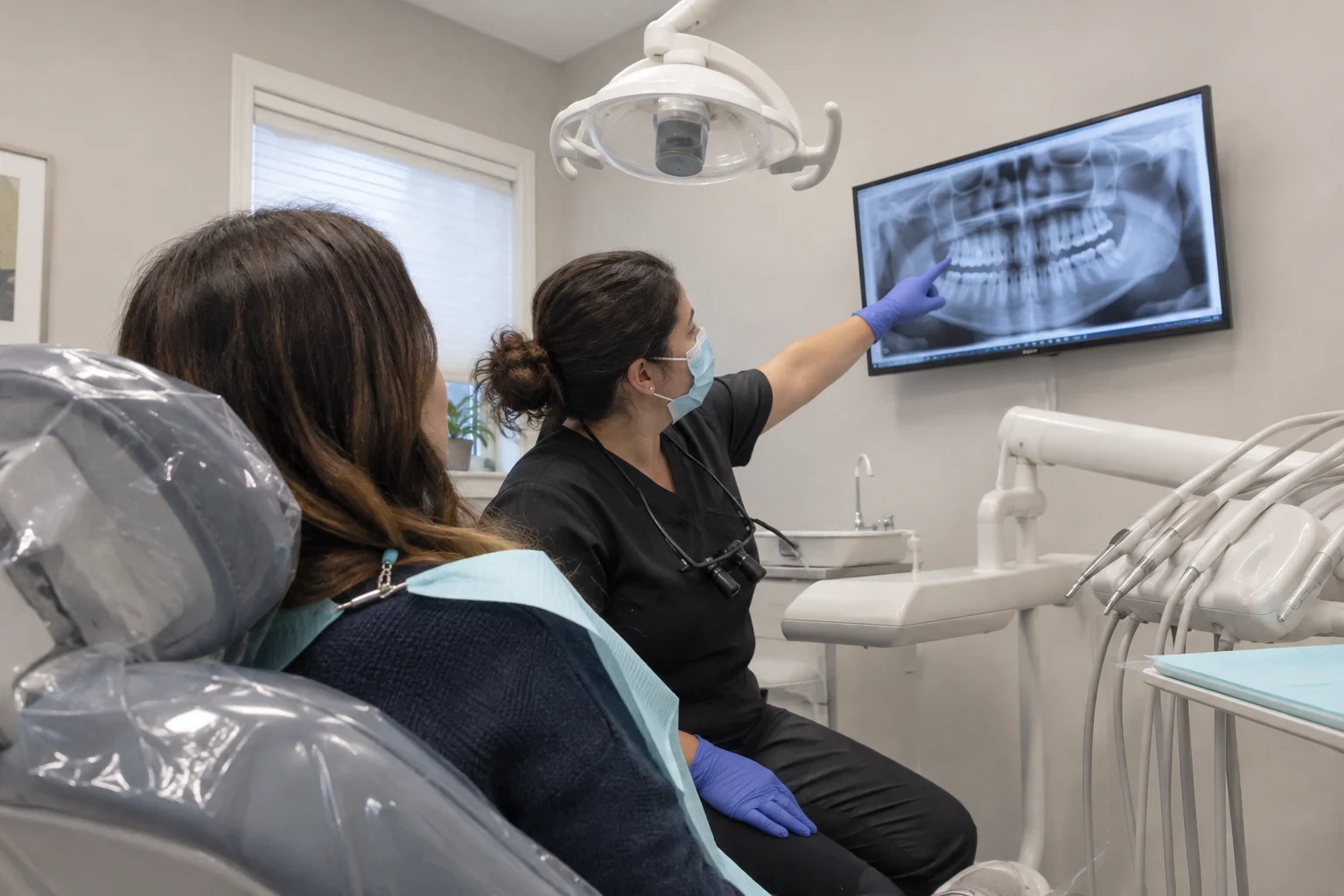
We take out the decayed part of the tooth, clear away the bacteria and rebuild the shape with tooth-colored composite bonded to the enamel. Before any work begins, you look at the X-ray, hear which surfaces are affected and approve the plan.

What a filling fixes, and when it's the right call
A cavity is a hole that acid from bacteria dissolves through enamel and into the softer dentin underneath. Enamel does not grow back. Once the breakdown passes a certain point, the only way to stop it is to remove the soft, infected tooth structure and seal the space. That is a filling.
Fillings fit when the damage is small to moderate and enough healthy wall remains to support the new material. If decay has taken out a cusp or reached the nerve, a filling can crack or fail early, and we will tell you plainly that a crown or another treatment is the better plan. Some very early white spots on enamel can be watched and treated with fluoride instead of drilled.
We walk you through each step against accepted clinical standards: what we are removing, why, and how we check the result before you leave.
What happens at your filling appointment
- A careful exam with X-rays
- A mirror cannot see decay hiding between teeth, but bitewing X-rays can. We show you the dark area on the image and name the surfaces affected: the chewing surface, the cheek side or where two teeth touch.
- Slow, comfortable numbing
- We start with a topical gel and then deliver the anesthetic slowly, which feels gentler. For lower molars, a block that numbs that half of the jaw is sometimes needed.
- All the decay comes out
- Every bit of soft, discolored dentin is removed, and we inspect the base of the cavity before filling it. Decay sealed under a filling is a leading cause of fillings failing from below.
- Composite built up layer by layer
- We add composite resin in thin layers and harden each one with a blue curing light. Working in layers reduces shrinkage stress, so gaps at the margin and sensitivity afterward are less likely. The shade is matched to your tooth.
- Bite adjustment and polishing
- Articulating paper shows us where you bite, and we smooth down any high point. Even a slightly tall filling can leave the tooth sore each time you chew.
- Swapping out worn fillings
- We can replace old silver amalgam or tired composite that has cracked or begun to leak at the edges. We only suggest it when the exam or X-ray points to an actual problem.
Clues that a tooth needs a filling
A jolt from cold drinks or sugar
A brief, sharp sting from a cold sip or something sweet often means decay has broken through to the dentin.
Food catching in the same place
When floss frays or food keeps lodging between the same pair of teeth, a cavity or a chipped edge on an old filling may be the cause.
Dark spots or a rough patch
Have us look at any brown or gray spot, chalky white area, or edge your tongue won't leave alone.
It hurts to chew
Biting pain may come from a cracked filling or decay beneath it. If the pain lingers or throbs, the nerve may be affected, so book a visit soon.
A dark outline around an old filling
Over time fillings wear and their edges can pull away. A dark ring around one can mean bacteria are working their way in.
What changes the price of a filling
Fillings are priced by tooth and by surface, so two in the same mouth can cost quite different amounts. We go over the treatment plan and your likely insurance payment before we begin. We accept most dental insurance plans. Without coverage, you can use our Office Dental Plan, made for patients in that spot, or spread payments out with the CareCredit Patient Payment Plan.
How many surfaces
Filling only the chewing surface is a smaller job than a three-surface filling that extends into the spaces where teeth touch.
Where the tooth sits
Back molars are tougher to reach and keep dry than front teeth, and the filling there must stand up to far stronger chewing.
How deep the decay goes
When a cavity runs deep, a protective liner may go over the dentin nearest the nerve. Decay that has reached the nerve calls for a different plan.
Removing an existing filling
Drilling out old amalgam or composite takes extra chair time and can reveal decay the X-ray missed. If we find that, we pause and talk with you before continuing.
What your plan pays
Plans cover fillings differently, and some pay a different rate for composite on back teeth than on front teeth. We help you see what yours really covers.
Step by step at your visit
- 1
Review and explain
Together we look at the X-rays, find the spot and confirm the number of surfaces involved. You approve the treatment plan before we numb anything.
- 2
Numb and keep dry
After the tooth is numb, cotton rolls or a small rubber dam keep it dry. A wet tooth does not bond well with composite, so this step counts for a lot.
- 3
Clear decay and shape
We remove the decay and shape the space to support the filling. Between teeth, a thin band wraps the tooth so the new contact is snug and food won't get trapped.
- 4
Bond, build and harden
Etch and bonding agent go on first, followed by composite in layers, each set with the curing light. The filling is completely hard before you leave the chair.
- 5
Bite check, then home
We fine-tune and polish. Eating is fine once the numbness fades, usually after a couple of hours; until then, chew on the other side so you don't bite your cheek.
Filling questions we hear
Are your fillings silver or tooth-colored?
We use tooth-colored composite resin. It bonds to enamel and dentin, so we can often keep more healthy tooth than with amalgam, which needs undercuts to hold. It also blends with your tooth's shade.
Does getting a filling hurt?
For most people the shot is the only part they really feel, and we use a topical gel first and inject slowly to keep it gentle. After the tooth is numb, you notice pressure and vibration, not sharp pain. Some cold sensitivity for a few days is normal. If it worsens or the tooth hurts when you bite, call us and we will recheck your bite.
How many years will a filling last?
It depends on the size, the location and habits such as clenching or grinding. Small fillings on surfaces that see light chewing usually last the longest. Routine exams and cleanings help us catch a worn margin before decay gets underneath.
Do you fill children's teeth?
Yes. Baby teeth get cavities too, and baby molars save room for adult teeth for years, so fixing them is worthwhile. See our Kids' Dentistry page for how we help young patients feel at ease.
When won't a filling do the job?
When much of the tooth is missing, a cusp has snapped off or the tooth is cracked, a filling may not last. A crown is usually stronger in those cases, and our Crowns & Bridges page explains it. If the tooth can't be saved, we will discuss extractions with you openly.
Get that cavity taken care of
Tell us which tooth is bothering you and we will set aside time to look at it, explain what we see and map out the plan. Patients come to us from Sutton, Grafton, Millbury and the towns around them.