ServicesExtractions
Extractions in Sutton, MA
Taking out a tooth can end the throbbing and protect its neighbors when it has split beneath the gum, formed an abscess, or lost too much structure to support a filling or crown. We map out each extraction from an X-ray and your medical history, and walk you through every step first.
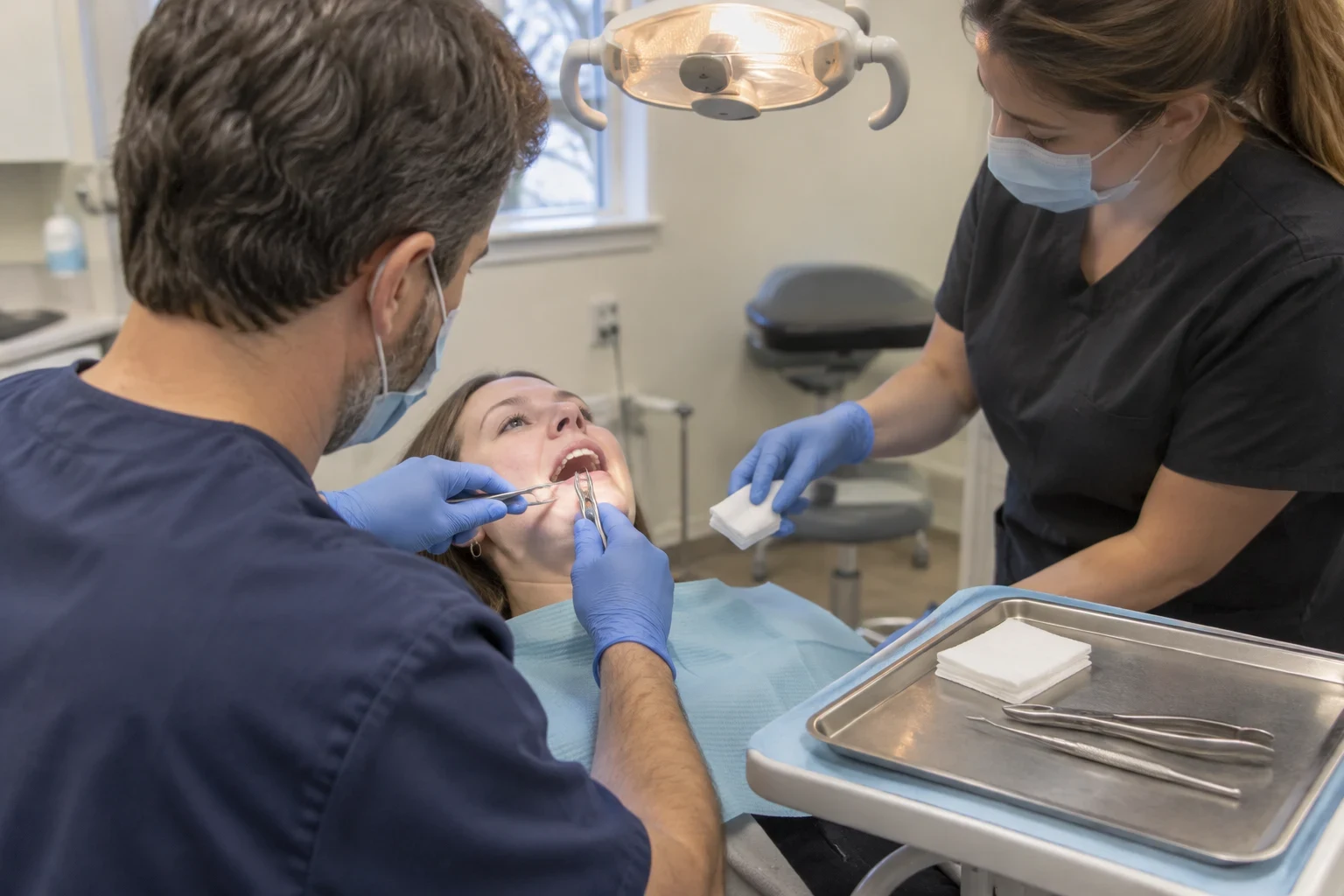
When Removing a Tooth Is the Right Call
An extraction is usually the last option, not the first. A tooth with a cavity that hasn't reached the root, or a crack that stops above the bone, can often be saved with a filling or a crown. We recommend removal when the damage has gone past what a restoration can support: a vertical root fracture, decay that has destroyed most of the tooth's structure, bone loss from gum disease that leaves the tooth loose, or a tooth crowding others out of position.
Dentistry has its own rules, and we follow them openly. Before any extraction we take an X-ray to see the root shape and nearby structures, review your medications, and have you sign a consent form that lists the risks in plain language. If the X-ray shows a root wrapped around a nerve canal or fused to bone, we tell you that and refer you to an oral surgeon instead of attempting something that belongs in a surgical setting.
Patients come to us from Sutton and nearby towns like Millbury, Grafton and Whitinsville. Kids and adults are both seen here, including baby teeth that won't fall out on their own.
What Your Extraction Visit Includes
- Diagnostic X-ray
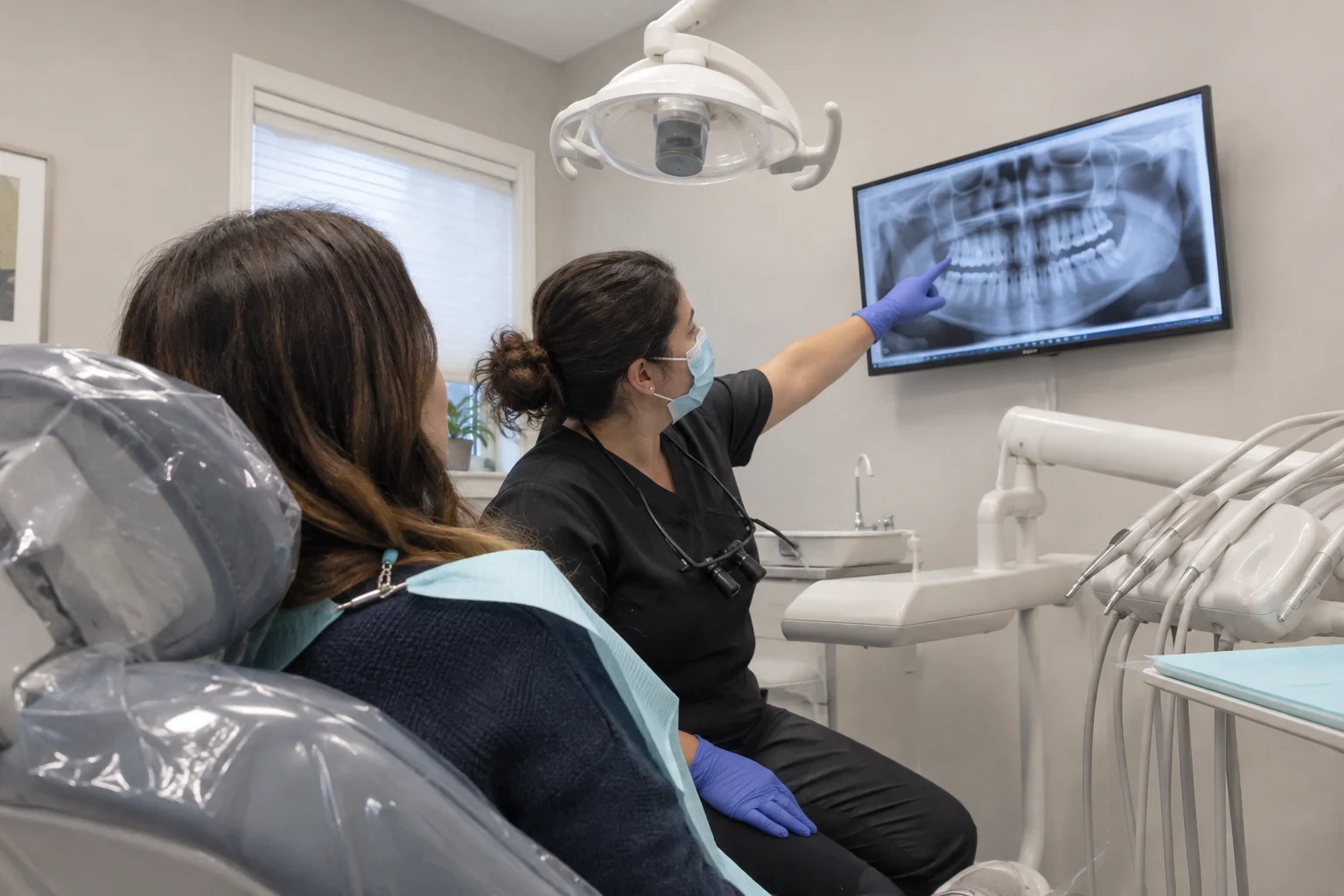
- A periapical or panoramic image shows root length, curvature and how close the tooth sits to the sinus or the nerve in the lower jaw. That image decides whether a simple or surgical approach is needed.
- Health history review
- Blood thinners, bisphosphonates for bone density, diabetes and heart conditions all change how a socket heals. We go over your list before scheduling so nothing surprises anyone in the chair.
- Local anesthetic and comfort checks
- We numb the tooth, the surrounding gum and the ligament holding it in place, then test the area before we begin. You'll feel pressure during removal, not sharp pain, and you can signal us to pause at any point.
- Socket care
- After the tooth is out we clean the socket, check for leftover root fragments and place gauze so a stable blood clot forms. Stitches are added when the gum needs help closing.
- Written aftercare and a follow-up
- You leave with instructions on bleeding control, eating and cleaning, plus a number to reach us with questions. We schedule a short check if the extraction was involved.
Signs a Tooth May Need to Come Out
Throbbing pain with swelling
Pain that keeps you awake, along with swelling in the gum or face, often points to an abscess at the root tip. Sometimes a root canal elsewhere can save the tooth; sometimes it can't, and an X-ray tells us which.
A tooth that broke at the gumline
If most of the crown has snapped off and the remaining edge sits below the gum, there may be nothing left for a crown to grip.
Looseness from gum disease
When the bone around a root has worn away, the tooth shifts when you bite. Leaving it can spread infection to neighboring teeth.
Baby teeth that won't let go
A primary tooth still firmly in place while the adult tooth erupts behind or beside it can push the new tooth off course.
Crowding before alignment
Some orthodontic and clear aligner plans need space that only removing a tooth can create. We'll explain the reason if that applies to you.
How Extraction Day Works
- 1
Confirm the plan
We review your X-ray and medications again and answer any last questions. You sign consent only once you understand what we're doing and why.
- 2
Numb the area
Anesthetic goes in slowly, and we wait until the tooth, gum and ligament are fully numb before touching the tooth.
- 3
Loosen and remove
Instruments called elevators widen the socket and loosen the ligament, then forceps lift the tooth out. A tooth with several roots may be divided into sections so each root comes out cleanly with less pressure on the bone.
- 4
Close and protect
We clean the socket, place stitches if needed and have you bite on gauze. Most simple extractions take well under an hour from numbing to gauze.
- 5
Recovery at your pace
Skip straws, smoking and hard rinsing for the first days so the clot stays put. That clot is what prevents dry socket, the most common painful complication.
What Affects the Cost of an Extraction
An extraction's cost depends on the tooth, its roots and what the X-ray reveals, so no single price works for everyone. Every item appears on your treatment plan before we begin, so you know why each charge is there. Most dental insurance plans are accepted. Uninsured patients can join our Office Dental Plan, and the CareCredit Patient Payment Plan offers financing.
- Simple or surgical
- A fully erupted tooth with straight roots is a simple extraction. A broken tooth, curved roots or gum covering part of the tooth can mean an incision or removing some bone, which is more involved.
- Where the tooth sits
- Front teeth generally have one root, while molars have two or three and often take more time.
- Imaging required
- A single X-ray shows many teeth at once. Some cases call for a wider image to see the nerve canal or the floor of the sinus.
- Replacing the tooth
- A bridge to close the space is its own step with its own fee. We can include it on the same plan so you see the full picture.
Extraction Questions We Hear Often
Something not covered here? (508) 691-2717
Will it hurt?
Anesthetic blocks sharp pain, so you mostly feel pressure and pushing as the tooth is removed. Soreness usually peaks over the first two or three days, and we will suggest over-the-counter pain relievers that fit your health history.
When can I go back to my usual foods?
Start with soft, lukewarm foods such as yogurt, eggs or soup, and chew on the other side to protect the clot. Most people return to firmer food over about a week as the gum heals, and a surgical extraction can add a few days.
Should I replace the tooth?
Often, yes. A gap lets the teeth beside it tip in and the opposing tooth drift toward the space. A bridge is one option we provide, and we will discuss whether it suits you at the consultation.
Can my child have a tooth pulled here?
Yes. We take out baby teeth that are stuck, badly decayed or in the way of an adult tooth, explain each step to your child simply and keep the visit brief. Our Kids' Dentistry page describes how we care for young patients.
What if my tooth needs an oral surgeon?
When the X-ray shows a deeply impacted tooth or roots close to the nerve, we tell you directly and refer you. The decision is based on the image, and we show it to you so the reason is clear.
Get a Clear Answer About That Tooth
We'll look at the X-ray with you, explain whether the tooth can be saved and set up a treatment plan you understand before anything happens.