ServicesKids' Dentistry
Children's Dental Care in Sutton
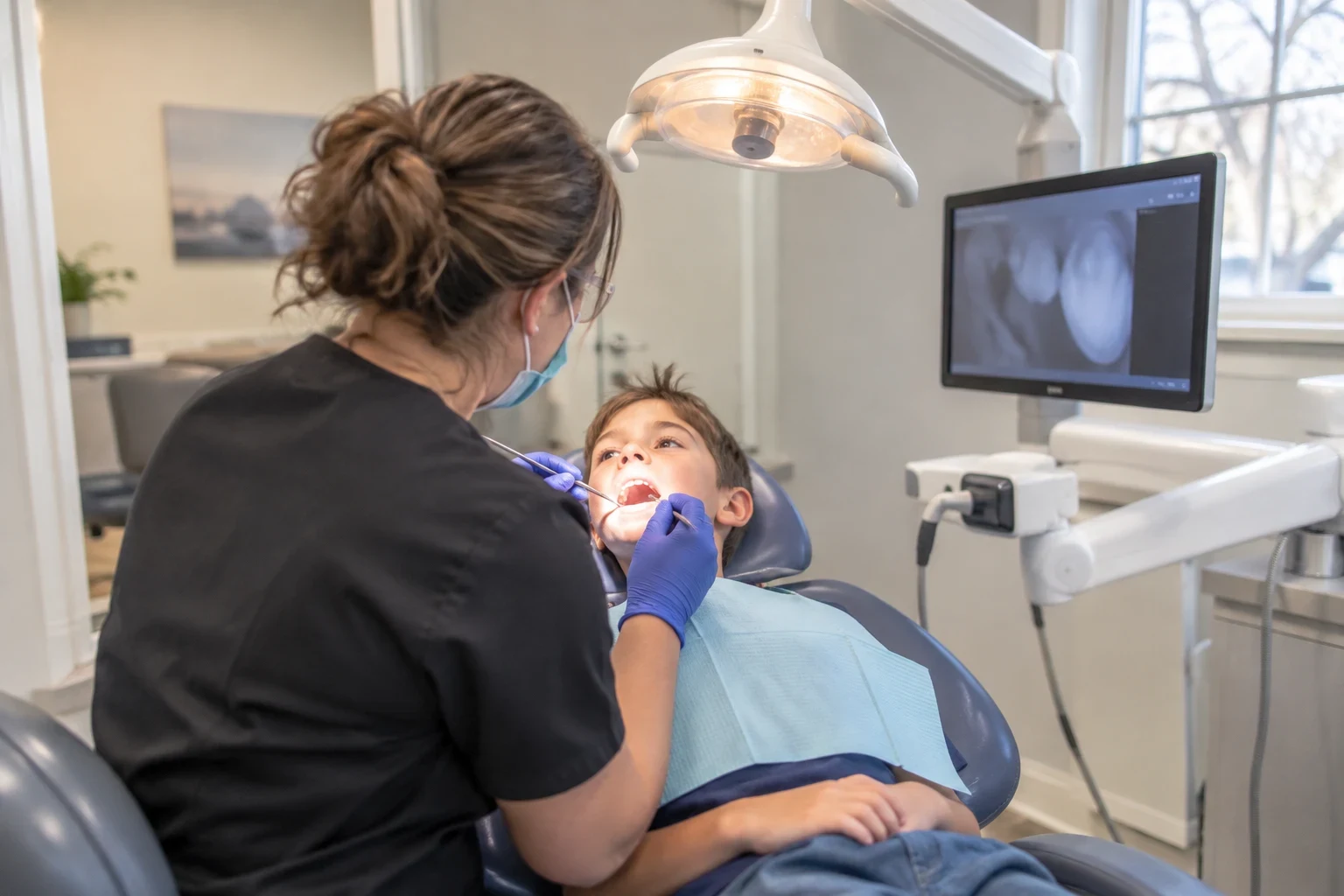
From the first baby tooth to the teenage years, we handle children's checkups, cleanings, sealants, fluoride and, if needed, fillings. Before any work in the chair, we tell you what we saw, why it matters and what we suggest.
Dental Care Built Around Growing Mouths
Baby teeth have thinner enamel than adult teeth, often less than half as thick, so a small cavity can reach the soft dentin and then the nerve faster than parents expect. Those same baby teeth hold space for the permanent teeth underneath. Losing one early to decay can let neighboring teeth drift and crowd the adult tooth that is still coming in.
Our kids' dentistry visits are about catching that early and keeping treatment small. We follow published pediatric guidelines for when to start visits, how often to take X-rays and how much fluoride fits a child's age, and we tell you plainly which guideline we are following and why. Families come to us from Sutton and nearby towns like Grafton, Millbury and Northbridge.
What Happens at a Child's Visit
- Checking teeth, gums and bite
- We look over every tooth surface, the gums and the way the top and bottom teeth fit together. We also note loose baby teeth and adult teeth getting ready to come in.
- A cleaning made for small mouths
- Small instruments and a soft polish remove plaque and any tartar. We also teach your child to tilt the brush toward the gumline, where early decay most often begins.
- Fluoride varnish coat
- We brush on a thin layer of fluoride that sets within seconds and keeps strengthening enamel for months. We'll ask whether you use well water, which usually has little fluoride.
- Molar sealants
- The chewing surfaces of back teeth have tiny grooves narrower than a bristle, where food and bacteria collect. We flow liquid resin into the grooves and set it with a blue curing light. No drilling and no numbing.
- X-rays on a schedule, not every visit
- Bitewings reveal cavities between teeth that can't be seen by eye. How often we take them depends on your child's cavity risk, and a lead apron and thyroid collar are always used.
- Small fillings when needed
- Decay caught early can usually be repaired with a tooth-colored filling in one quick visit. The materials are described on our Fillings page.
When to Bring Your Child In
White chalky or brown patches
A dull, chalky line near the gums usually means the enamel is losing minerals. Caught that early, fluoride can sometimes reharden it and spare the tooth a filling.
Pain with sweets or cold foods
That kind of sensitivity often means decay has gotten through the enamel into the dentin, which passes signals toward the nerve.
Teeth are in but no visit yet
Pediatric guidelines advise a first visit by the first birthday or within six months of the first tooth. It's quick and easy.
A stubborn baby tooth or crowding
When an adult tooth erupts behind a baby tooth that hasn't budged, we check whether the baby tooth should be helped out. See our Extractions page for more.
A tooth chipped in a fall
A small chip can still leave dentin exposed. Give us a call and we'll book a visit to examine the tooth and check the root with an X-ray.
What Affects the Cost
A routine checkup and cleaning is the smallest bill, and most of any difference comes from what the exam turns up. We explain each item to you before we do it. We accept most dental insurance plans. If your child has no coverage, ask about our Office Dental Plan when you call, and for larger treatment, payments can be spread over time through the CareCredit Patient Payment Plan.
Your insurance plan
Many plans pay well for children's checkups, fluoride and sealants, but each plan sets its own age cutoffs and visit limits. When we can, we confirm your benefits ahead of the appointment.
Which X-rays are due
Depending on cavity risk, bitewings come due anywhere from every six months to every two years, and a panoramic image is reserved for certain ages. A visit with fewer images costs less.
Number of teeth sealed
Sealant fees are counted tooth by tooth. The first permanent molars usually get sealed near age six, and the second set near age twelve.
Cavities found
A filling that covers one surface of a tooth costs less than one spanning two or three surfaces. Regular visits catch decay while it is still small.
How the Appointment Goes
- 1
Phone call and history
When you call, we take your child's age, any medical conditions and your insurance details. You can tell us about any past dental worries so we plan around them.
- 2
Getting comfortable
We let your child see and touch the mirror, the air water syringe and the polisher before they go in the mouth. Parents are welcome in the room.
- 3
Exam, cleaning and any X-rays
The dentist examines, the cleaning follows, and fluoride goes on last. Most checkups take well under an hour.
- 4
A plain explanation for you
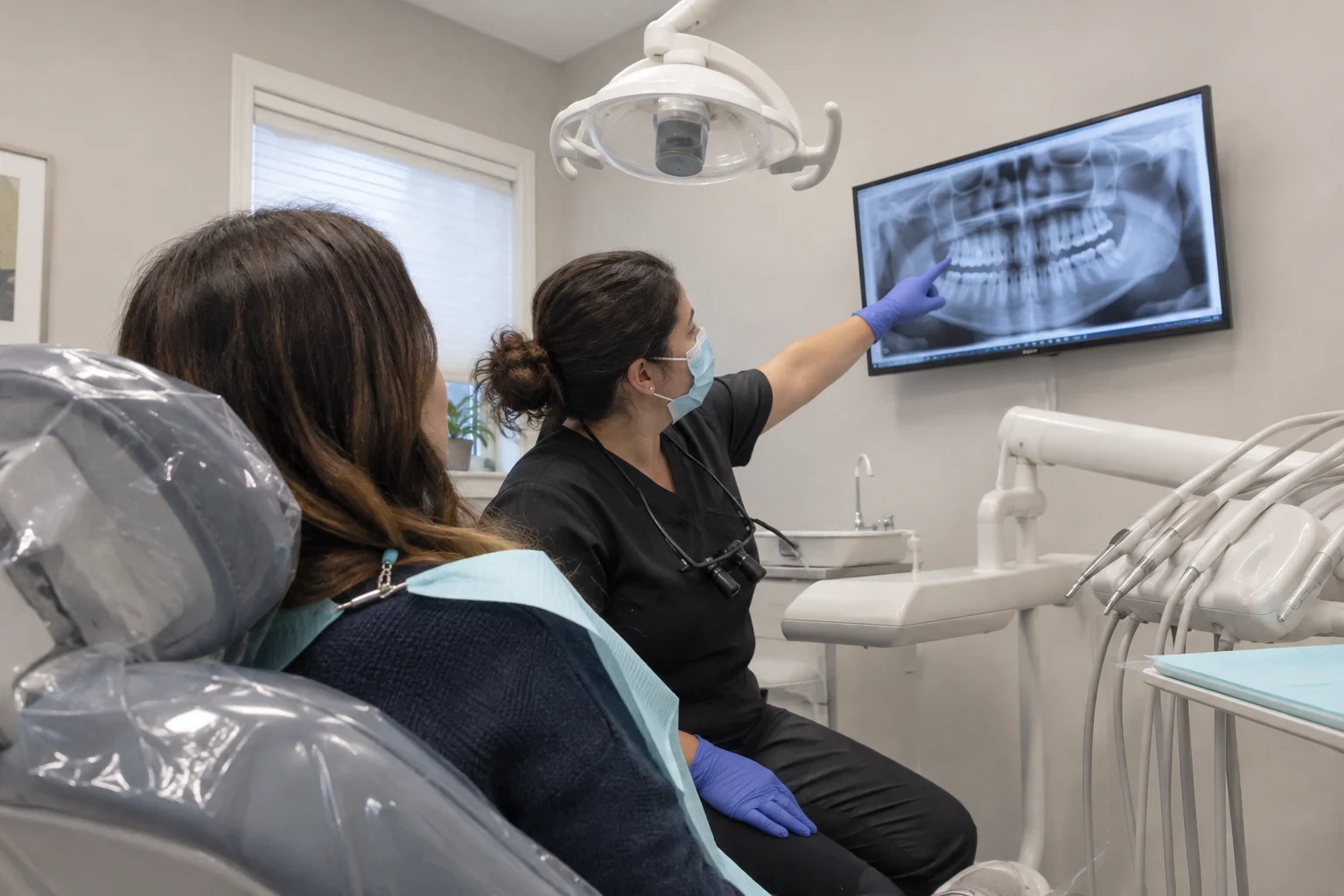
We show you on the X-ray or with photos what we found. If treatment is needed, you get a written treatment plan with each item listed, and nothing is done until you agree.
Parents' Questions About Kids' Dentistry
When should my child first see a dentist?
Pediatric guidelines call for a visit by the first birthday or within six months of the first tooth. It is a quick appointment: we count teeth, look at the gums and talk with you about bottles, brushing and fluoride.
Is it safe for kids to have dental X-rays?
Today's digital bitewings give a very low dose, and your child wears a lead apron and thyroid collar. We take images only when age and cavity risk call for them, not on one schedule for every child, and we tell you which are due and the reason.
Should a cavity in a baby tooth be fixed?
Usually, yes. Back baby molars often stay until about age eleven or twelve, so they still have years of work to do. Untreated decay can reach the nerve, cause pain or an abscess and harm the adult tooth forming underneath. Fixing it while small usually means an easier visit than waiting.
If my child has sealants, can they skip brushing?
No. Sealants only cover the grooves on the chewing surface. The sides of teeth and the gaps between them still need brushing and flossing, and we look at each sealant every visit in case it has worn or chipped.
May I be in the room with my child?
Of course. Younger kids often feel best with a parent close by, while some older children would rather go in on their own. Either way works.
Set Up Your Child's Next Checkup
Call us, give us your child's age and your insurance details, and we will find a time that fits around school. You will know what the visit includes before you arrive.