ServicesExams & Cleanings
Dental Exams & Cleanings in Sutton, MA
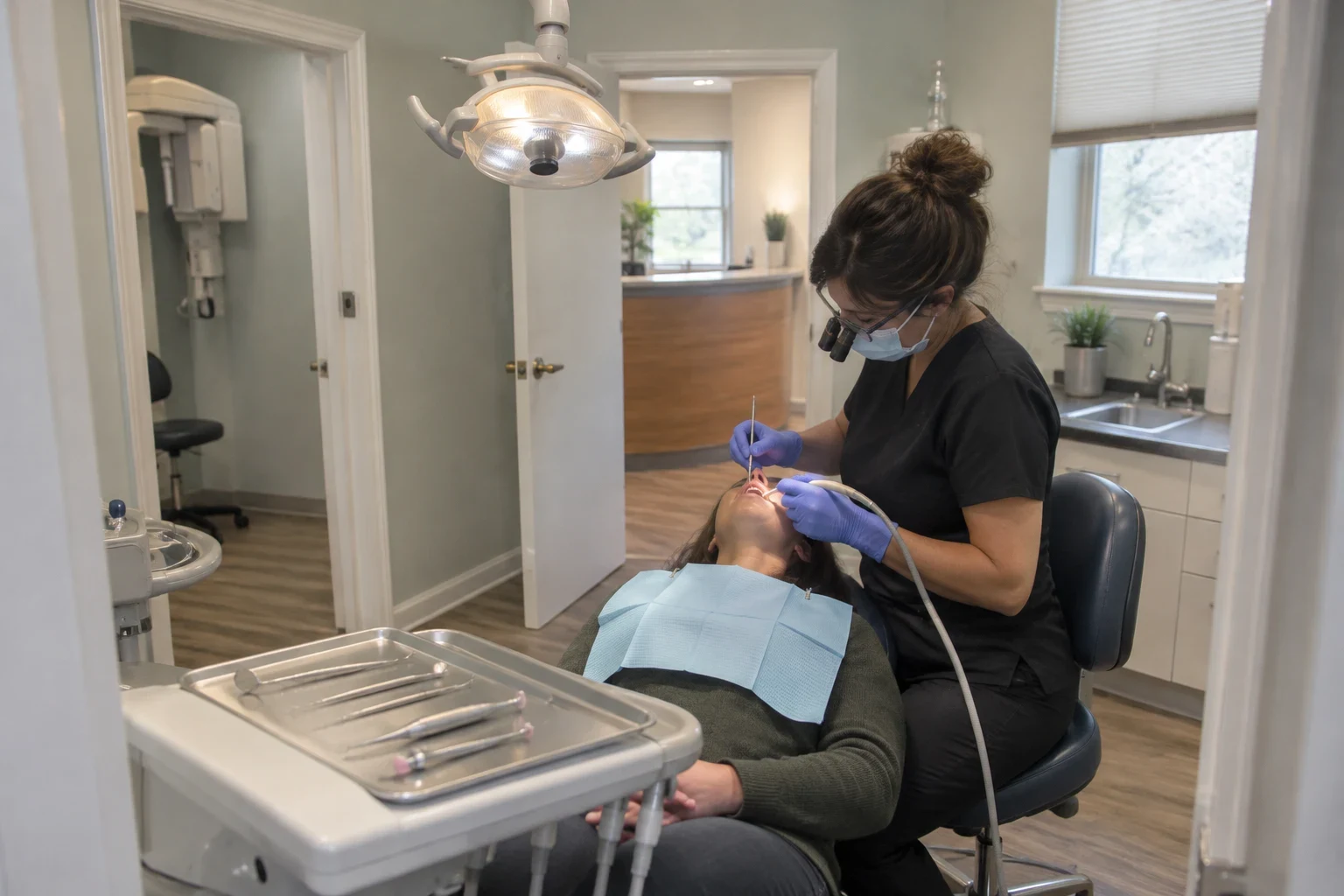
A checkup here is two jobs done carefully. A hygienist removes plaque and hardened tartar from every tooth surface, and the dentist examines your teeth, gums, bite and soft tissue. You leave knowing what we found, what can wait and what should not.
What a checkup does that brushing can't
Plaque left on teeth for a day or two starts to mineralize into calculus, usually called tartar. Once it hardens, a toothbrush and floss cannot remove it. It gives bacteria a rough surface to cling to right at the gumline, which is where gum inflammation and early decay usually start, often with no pain at all.
A regular exam and cleaning clears that buildup and catches problems while they are small. A soft spot in enamel found early may need only a small filling, or simply closer watching. The same spot found a year later can need a crown.
We also explain the reasoning behind each step: why X-rays follow a schedule based on your risk instead of being taken every visit, and how your insurance plan counts cleanings and images. Nothing about the visit should be a guess.
What's included in an exam and cleaning
- Scaling above and below the gumline
- The hygienist uses an ultrasonic scaler and fine hand instruments to remove calculus, including the band just under the gum edge that a brush never reaches. This is the part of the visit that does the most for gum health.
- Polishing and flossing
- A polishing paste lifts surface stain from coffee, tea and wine and leaves the enamel smooth, so new plaque has a harder time sticking. Flossing afterward checks every contact between teeth.
- Gum pocket measurements
- A thin probe measures the space between gum and tooth at several points on each tooth. Healthy readings are usually 1 to 3 millimeters. Deeper pockets or bleeding point to gum disease, and we record the numbers so we can compare them at your next visit.
- X-rays when they're due
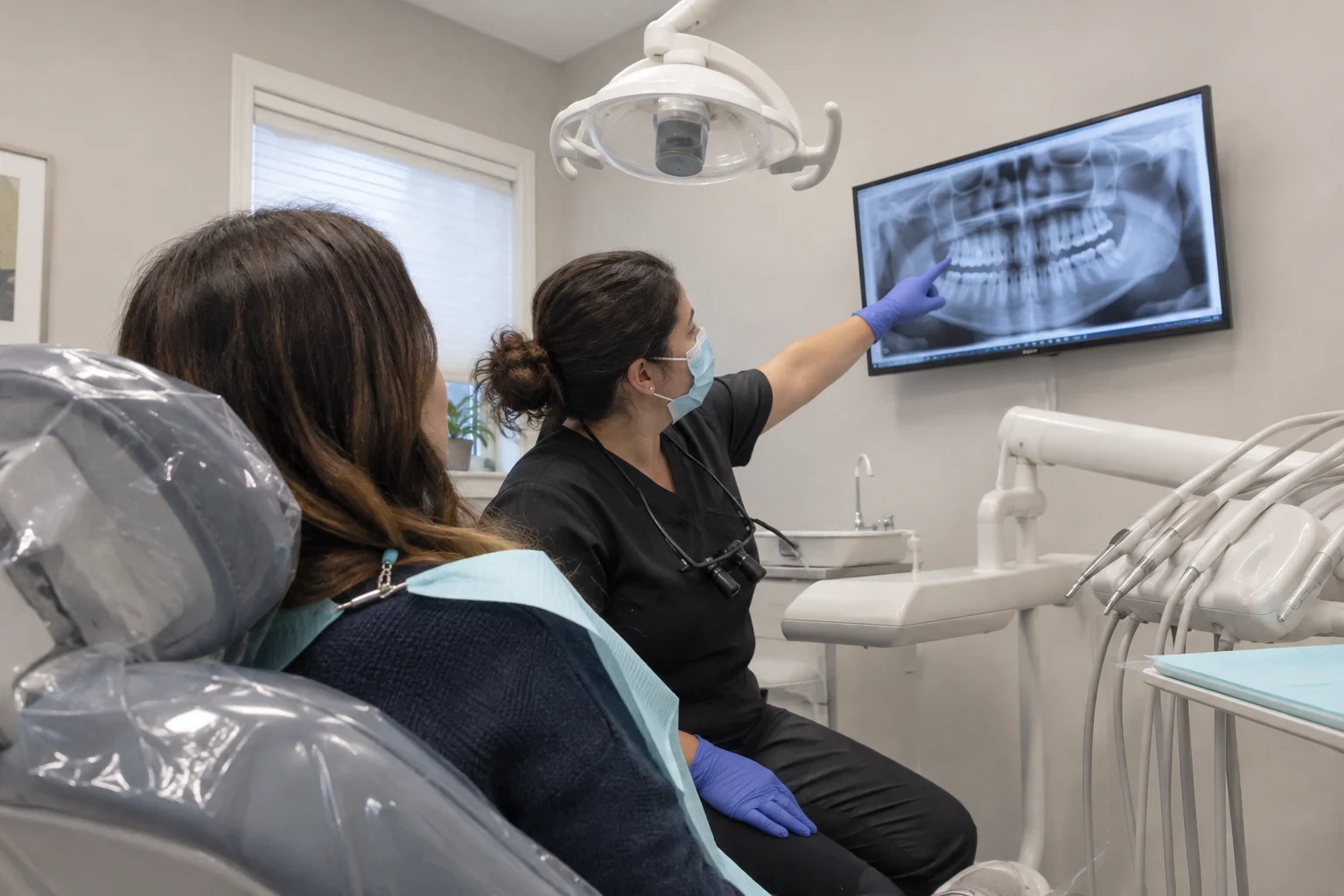
- Bitewing images show decay between back teeth and the level of the bone that holds them. How often you need them depends on your history and risk, and we tell you why before we take any.
- The dentist's exam
- The dentist checks each tooth, looks at existing fillings and crowns for cracks or leaking edges, evaluates your bite and jaw, and screens the tongue, cheeks and floor of the mouth for any unusual tissue.
- A plain summary
- We show you the X-rays and intraoral photos on screen and list findings by priority, so you can see what we see.
Signs it's time to book a checkup
Gums bleed when you brush
Bleeding is often the earliest sign of gingivitis, and at that point a cleaning plus better home care can turn it around.
It's been more than a year
Tartar keeps forming between visits. The longer the gap, the more there is to clear and the more time small issues have to get bigger.
Sensitivity to cold or sweets
A quick twinge may come from thin enamel, an exposed root or the start of a cavity. The exam shows which one, and each is treated its own way.
Bad breath that won't clear
Lasting odor usually comes from bacteria below the gumline or caught around an older filling.
A rough edge your tongue keeps finding
When a filling chips or its edge breaks down, bacteria can get under it and decay can grow out of sight. Finding it early usually means a smaller repair.
How your visit runs
- 1
Health history and your concerns
We review medications and health changes first. Blood thinners affect bleeding during scaling, and many common medications cause dry mouth, which raises decay risk.
- 2
X-rays if they're due
If images are due, we take them with a digital sensor and show them to you right away.
- 3
Cleaning with the hygienist
Scaling, polishing, flossing and gum measurements. If an area is sensitive, tell us; we can slow down, lower the ultrasonic setting or use a numbing gel.
- 4
Exam with the dentist
The dentist reviews the X-rays and pocket readings, then examines teeth, restorations, bite and soft tissue.
- 5
Your treatment plan and next visit
If anything needs work, such as fillings, we explain the options, give you an insurance estimate and schedule it. Then we book your next cleaning.
What affects the cost of a checkup
A routine exam and cleaning is a predictable visit for most people. What you pay depends on your plan's coverage and on what the exam turns up, and we go over both before adding any treatment. We accept most dental insurance plans. Without coverage, our Office Dental Plan is designed for you, and the CareCredit Patient Payment Plan can spread out the cost of follow-up work.
- Your plan's frequency rules
- Plenty of plans pay for two cleanings and one set of bitewings a year, and a full X-ray series less often. We confirm your plan's limits before taking anything it might not pay for.
- Which X-rays are due
- Two bitewings cost less than a full series. Which you need depends on how recent your last images are and how likely you are to get cavities.
- Buildup and gum health
- Deep pockets and bone loss call for scaling and root planing rather than a regular cleaning. It is its own procedure with its own billing, and we show you the readings behind the recommendation.
- New or returning patient
- Your first visit includes a more complete baseline exam and imaging, so it usually covers more than a regular recall.
Exam and cleaning questions
Something not covered here? (508) 691-2717
How often do I really need a cleaning?
Most adults do well with a cleaning twice a year. If you have had gum disease, every three or four months often works better, since the bacteria behind it settle back into pockets in about that span. Your gum readings set the schedule, not a blanket rule.
Why do I need X-rays if nothing hurts?
Cavities between teeth and early bone loss rarely hurt until they are far along. Digital bitewings deliver a very low dose, and we time them by your risk. If you prefer to put them off, we will explain what that means for you.
What is a deep cleaning?
The clinical term is scaling and root planing. It removes calculus and bacteria from the roots in pockets deeper than roughly 4 millimeters, typically one area of the mouth per visit with local anesthetic. A regular cleaning cannot treat active gum disease; this can.
Does a cleaning hurt?
Most people notice pressure and vibration rather than pain. Swollen gums can feel tender and exposed roots may react to the water spray, and we can numb those spots with gel or local anesthetic.
Can my kids have checkups here too?
Yes. Kids go through the same steps, adjusted to their age, with sealants and fluoride when they help. See our Kids' Dentistry page for what their visits include.
What if I don't have dental insurance?
Patients without insurance can use our Office Dental Plan, which covers routine preventive visits. If the exam finds something that needs treatment, the CareCredit Patient Payment Plan lets you pay over time.
Put your next checkup on the calendar
New patients and returning patients from Sutton, Millbury, Grafton and nearby towns are welcome. One phone call sets your appointment, and we can check your insurance before you arrive.