ServicesInvisalign / Clear Aligners
Invisalign and Clear Aligners in Sutton
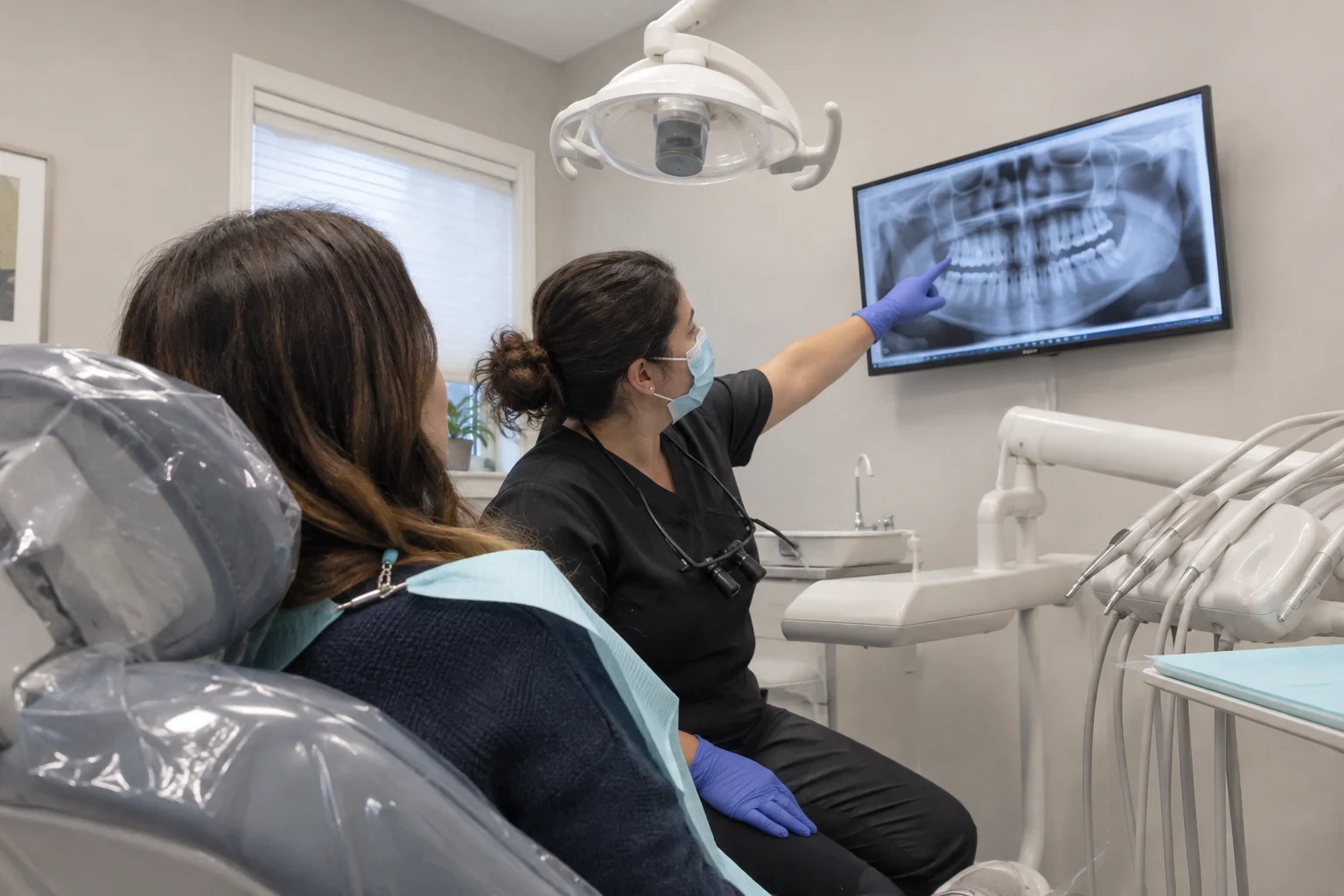
We straighten crowded, gapped and crooked teeth with removable clear trays. Before any aligner is ordered, we check your gums, existing fillings and bite, then show you the planned tooth movement on screen so you know what each stage does.
How clear aligners move teeth
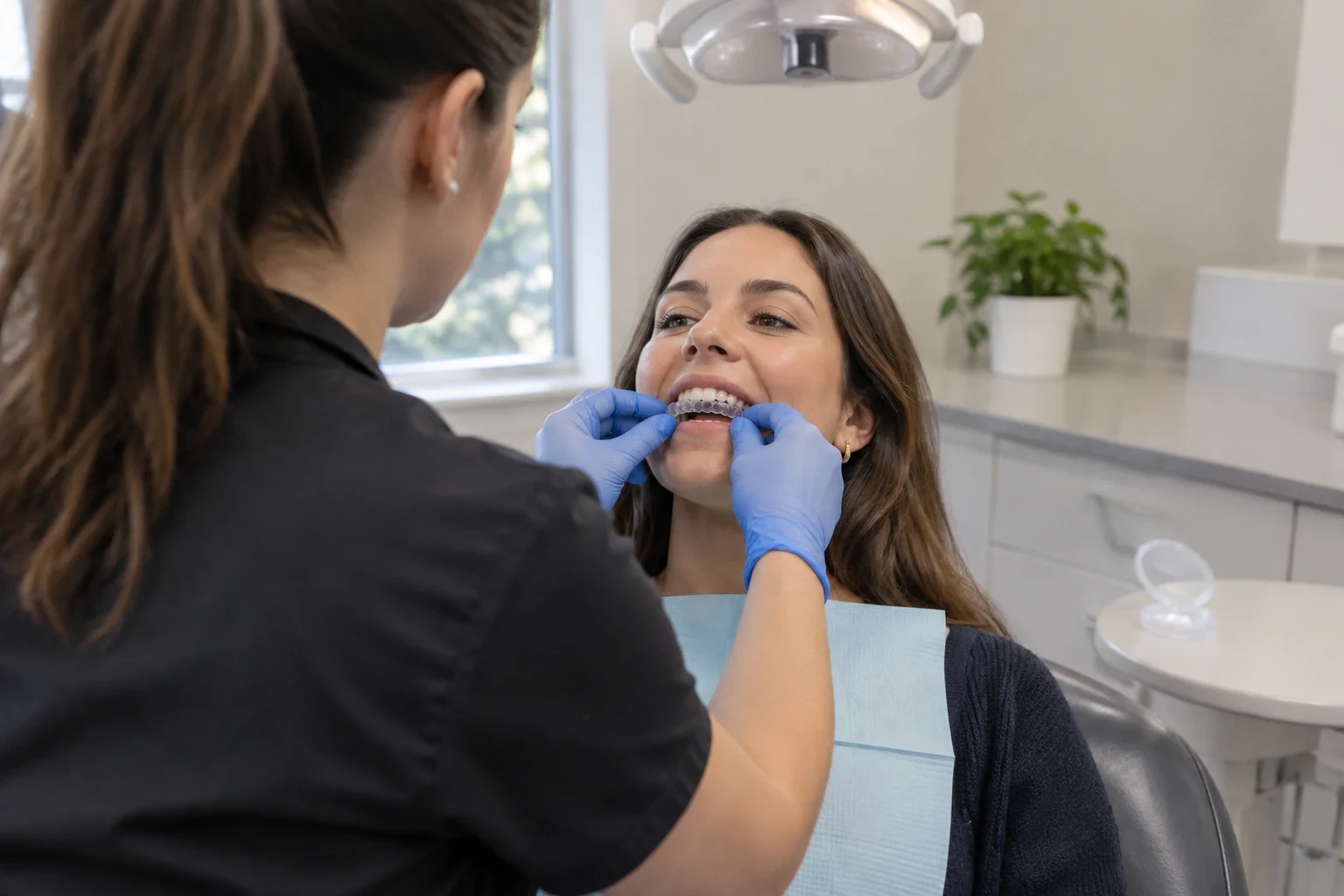
An aligner is a thin, custom-shaped plastic tray. Each one in the series is shaped slightly differently from the last, so it presses specific teeth a fraction of a millimeter toward their planned position. Bone around the root remodels under that light, steady pressure, and the tooth settles into its new spot before the next tray takes over.
Aligners work well for mild to moderate crowding, spacing, and many overbite, underbite and crossbite cases. Some problems, such as severe rotations or large jaw discrepancies, may need traditional braces or a referral to an orthodontist. We tell you which group your teeth fall into at the first visit, before you commit to anything.
There is also a set of rules we follow before treatment starts. Teeth with active decay or gums with active periodontal disease should not be moved, because pressure on an unhealthy root or a weak filling can make the problem worse. That is why your plan begins with an exam, X-rays and any needed fillings or cleanings.
What your aligner treatment includes
- 01
Exam and X-rays first
We look for cavities, gum pockets, bone loss and old restorations that could crack under movement. If something needs care, we handle it before the scan. A current exam also shows us roots that are short or already worn.
- 02
Digital scan of both arches
A handheld intraoral scanner records your teeth in 3D, so there is no tray of impression putty. That scan becomes the starting model for your treatment plan.
- 03
A movement plan you can see
We go over the simulated movement with you stage by stage, including how many aligners are planned and where attachments will sit. You see the projected result before anything is ordered.
- 04
Attachments and spacing adjustments
Attachments are small tooth-colored composite bumps fixed to certain teeth and hardened with a curing light, giving the tray something to grip for rotations and root tipping. Some cases need interproximal reduction, a light polishing between teeth that removes a fraction of a millimeter of enamel to make room.
- 05
Progress checks and refinements
We see you at set intervals to confirm your teeth are keeping pace with the trays. If a tooth lags behind, we can rescan and order refinement aligners.
- 06
Retainers at the end
Teeth tend to drift back toward where they started, especially in the first year. Retainers hold the result, and we explain how long and how often to wear them.
Questions about Invisalign / Clear Aligners?
Call(508) 691-2717When clear aligners might suit you
Front teeth that overlap
Where teeth overlap, plaque hides in places brushing and flossing miss. Lining them up makes everyday cleaning work better.
Spaces where food gets stuck
Gaps between teeth trap food and can make the gum there tender. Closing them often makes chewing easier.
Chipped or unevenly worn teeth
A bite that does not line up puts extra force on certain teeth, which can chip or flatten them. Fixing the bite shares the load more evenly.
Teeth moving after braces
Plenty of adults had braces as teenagers and later quit wearing the retainer. A brief series of aligners can often move those teeth back.
You prefer trays you can take out
You remove aligners to eat, brush and floss, which works well if you want to skip brackets and wires.
Your aligner visits, in order
- 1
First visit and records
We check teeth and gums, take X-rays and photos, and scan the upper and lower teeth. Any decay or gum disease we find gets treated before a single tooth is moved.
- 2
Going over the plan
You see the simulated tooth movement, how many trays it takes, and where attachments and any spacing work will go. The cost comes to you in writing, item by item.
- 3
Getting your first trays
Using a template tray and a curing light, we bond the attachments and fit your first aligners. Before you go, we show you how to put them in, take them out, keep them clean and when to move to the next set.
- 4
Daily wear and checkups
Trays stay in roughly 20 to 22 hours a day, and you change them on the schedule we set. Each checkup confirms the fit and spots any tooth falling behind.
- 5
Wrapping up with retainers
We remove the attachments, take one last scan and give you retainers to keep teeth in their new places.
What goes into the price of clear aligners
Aligner pricing mostly follows two things: how far your teeth have to move and how many trays it takes to get them there. Once we have your exam and scan, you get the total in writing, item by item, and we talk with you before anything new is added. Most dental insurance plans are accepted here. With no coverage, you can use our Office Dental Plan, which was set up for that case, or pay over time with the CareCredit Patient Payment Plan.
- How involved your case is
- Light crowding can be handled with a short run of trays. Rotated teeth and bite problems need more stages and more visits to check progress.
- Care before treatment
- Any fillings, cleanings or gum care needed before aligners are charged on their own. That work keeps the teeth healthy before they start moving.
- Extra rounds of trays
- A tooth that falls behind may need another set of trays to reach its spot. Your written plan says whether we expect that for you.
- Retainer choice
- The type of retainer you pick and the number of backup sets you order both affect the final number.
- Ortho coverage on your plan
- Some plans include an orthodontic benefit, usually with an age limit or a lifetime cap. We find out what yours pays before you start.
Questions about clear aligners
How long each day do the trays need to be in?
Aim for roughly 20 to 22 hours. Take them out only for meals, drinks other than water, and brushing and flossing. Teeth move because the trays press on them lightly and steadily, so long gaps slow progress, and skipped hours are the usual reason a case runs past its plan.
Will the aligners be painful?
Each new tray feels tight at first, and teeth can feel mildly achy for about a day. That is the ligament around the root reacting to pressure, a sign the tray is working. It usually settles fast, and an over-the-counter pain reliever can help.
Can a teenager get aligners?
Usually, once most adult teeth are in. Teens do better when a parent helps track how long the trays stay in. During the exam we look at growth and bite and let you know if aligners or a different option suits your child.
I lost or broke a tray. Now what?
Call the office. Based on where you are in the series, we may move you to the next tray or back to the last one until a new one arrives. Try not to go days without a tray, since teeth can start shifting.
Will insurance pay toward Invisalign?
Only if your plan has an orthodontic benefit, and many limit it by age or with a lifetime cap. Bring your insurance details to the visit and we will look it up. Without insurance, you can use our Office Dental Plan or make monthly payments through the CareCredit Patient Payment Plan.
Preview your new smile before treatment begins
At a consultation we check your teeth, take the scan and show you what aligners could change in your bite. Patients drive in from Sutton, Millbury, Grafton and towns close by.