ServicesTeeth Whitening
Teeth Whitening in Sutton
We lighten stained and yellowed teeth with professional peroxide gels, applied after an exam confirms your enamel, gums and fillings are ready for it. You get a realistic shade goal, protected gums and a plan for sensitivity before anything is applied.
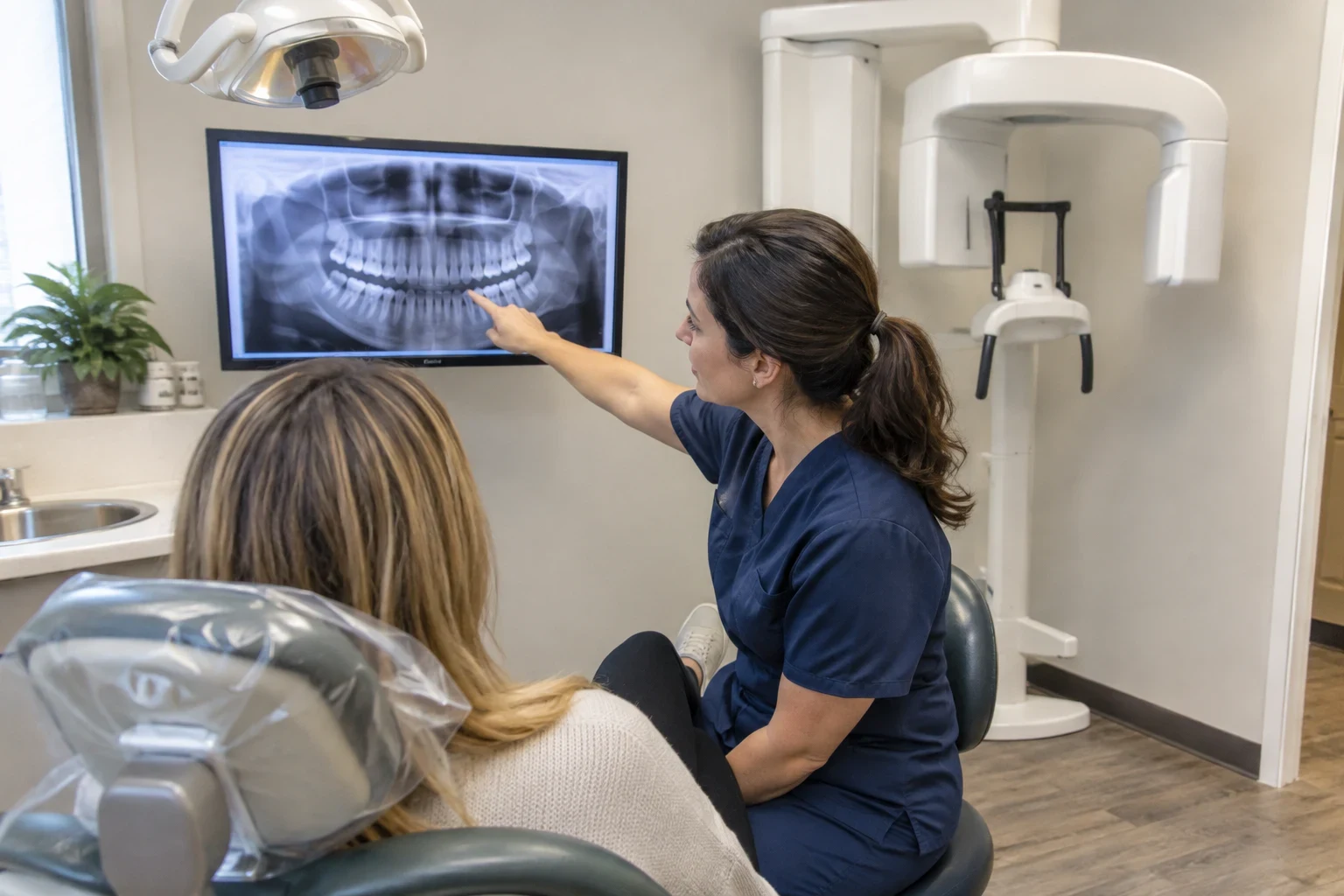
What Professional Whitening Does
Whitening gels contain hydrogen peroxide or carbamide peroxide, and carbamide peroxide turns into hydrogen peroxide once it is in your mouth. The peroxide moves through the enamel to the dentin beneath and oxidizes the pigment molecules behind the discoloration. So the tooth's own color changes, not only its outer surface.
Stronger gels are designed for use with a dentist overseeing them, and for good reason. Peroxide that reaches untreated decay, a cracked tooth or an exposed root can hurt sharply, and gel sitting on the gums can irritate them. That is why our order never changes: exam, a cleaning when needed, and then whitening.
Yellow and brown stains from coffee, tea, red wine, tobacco and ordinary aging respond best. Gray staining from some antibiotics taken as a child, or dark areas left by an old injury, lighten more slowly, and we tell you so from the start.
What Your Whitening Treatment Includes
- Readiness exam
- We check for active decay, leaking fillings, worn enamel and gum recession. Any of these can turn whitening into a painful week, so they get addressed first.
- Shade record
- We record your starting shade with a shade guide and photos. This gives us a fixed reference, so the result is measured, not guessed.
- In-office whitening
- A resin barrier is painted over your gums, then a higher-concentration gel is applied in timed rounds. Most of the change happens in a single visit.
- Custom take-home trays
- We take an impression or scan and make trays that fit your teeth closely. A snug tray keeps the lower-strength gel on the enamel and off your gums, which is where store-bought trays fall short.
- Sensitivity plan
- We can recommend a potassium nitrate toothpaste before and after treatment, and we adjust wear time if your teeth react.
- Restoration check
- Crowns, bridges and tooth-colored fillings do not change color with peroxide. We point out which ones may look darker after whitening so you can decide what to do.
Signs Whitening Is the Right Next Step
Gradual yellowing
Enamel thins with age and the darker dentin shows through. Peroxide lightens that dentin, so this kind of yellowing usually responds well.
Coffee, tea or wine stains
Pigments from dark drinks build up in the enamel over years. A cleaning removes surface film, and whitening reaches the stain below it.
Over-the-counter strips stopped working
Drugstore products use lower concentrations and loose-fitting delivery. If you have plateaued, a supervised gel in a fitted tray often moves the shade further.
An upcoming crown or bridge
Porcelain is matched to your current shade and will not lighten later. If you want whiter teeth, whitening before your crowns and bridges are made lets the new work match the brighter shade.
Finished clear aligners
Once teeth are straight, staining often becomes the next thing you notice. Your aligner trays cannot double as whitening trays, so we make a proper set.
What Happens at Your Appointment
- 1
Exam and cleaning
We look for anything that would make whitening unsafe or painful, and remove tartar and surface stain so the gel contacts clean enamel. If you need a filling first, we schedule it and whiten afterward.
- 2
Shade and plan
We record your starting shade and agree on a target. We also explain whether in-office, take-home or both fit your stains and your schedule.
- 3
Gum protection and gel
For in-office treatment, cheek retractors hold your lips back, a barrier covers the gums and the gel goes on in timed rounds. We check comfort and shade between rounds.
- 4
Trays and instructions
If you are whitening at home, we fit your custom trays and show you how much gel to load. Too much gel spills onto the gums, so a small bead per tooth is enough.
- 5
Follow-up shade check
We compare the result to your starting record. For the first couple of days, teeth are slightly more porous, so we suggest avoiding dark drinks and tobacco while they settle.
What Goes Into the Cost of Whitening
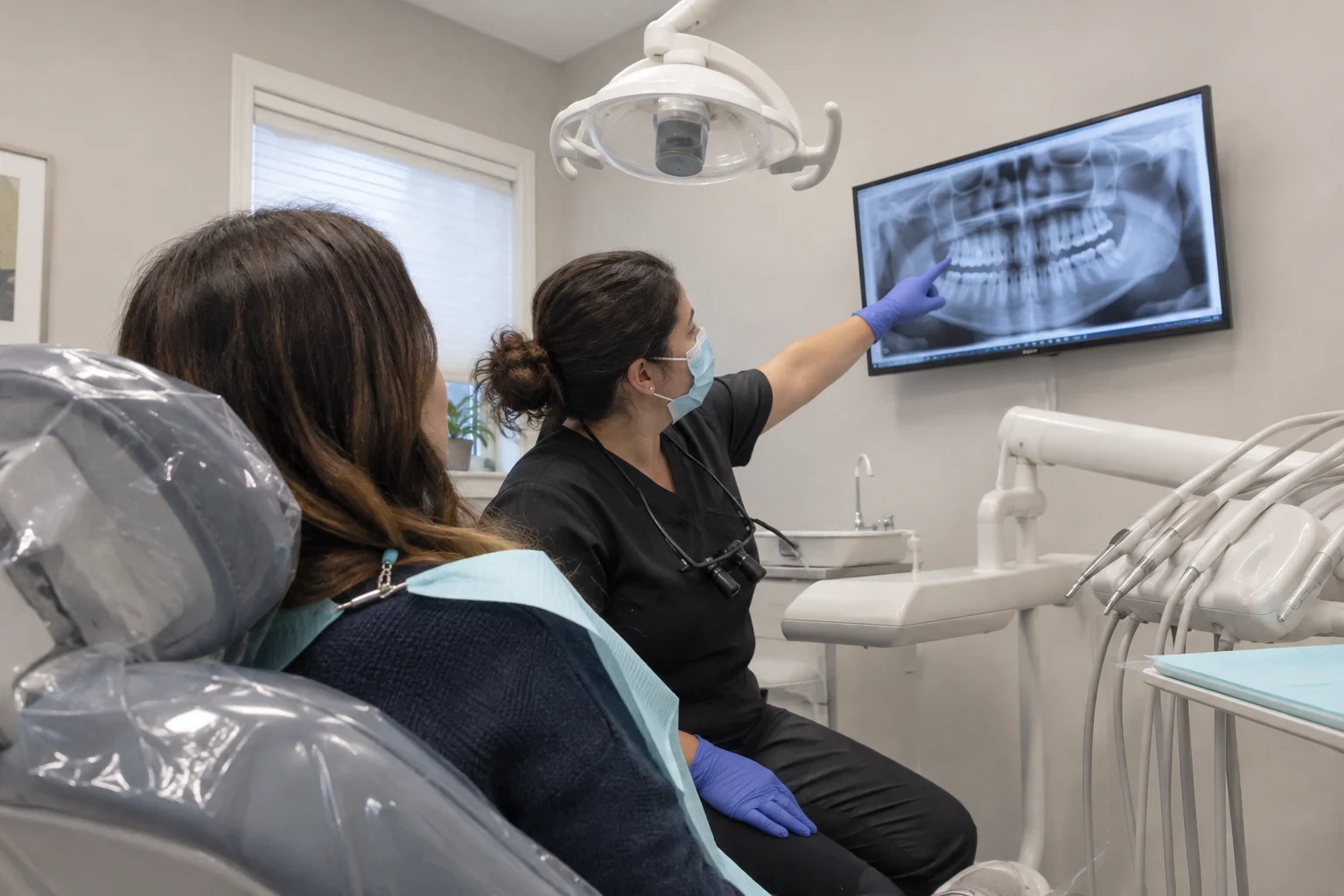
What you pay for whitening comes down to the method you pick and any care your teeth need before peroxide goes on. Insurers usually treat whitening as cosmetic, but the exam and cleaning before it are often covered. We accept most dental insurance plans and can check your benefits when you call. Without insurance, you can use our Office Dental Plan, and the CareCredit Patient Payment Plan lets you pay the rest over time.
- Office, home or a mix
- In-office whitening uses a stronger gel and more chair time. Home whitening is cheaper per session but requires trays made to fit you.
- The type of staining
- Ordinary yellowing usually lightens quickly. Deep gray or antibiotic stains may need more time in trays at home, which means more gel.
- Care needed beforehand
- Cavities, swollen gums or heavy tartar must be treated before peroxide touches your teeth, and those visits are billed separately from whitening.
- Existing crowns and fillings
- If a front crown or filling no longer matches once your teeth are lighter, replacing it raises the overall treatment cost.
Teeth Whitening Questions
Something not covered here? (508) 691-2717
Does whitening damage enamel?
Used as directed, peroxide gels do not dissolve enamel. They can dehydrate teeth temporarily, which causes the short-term sensitivity some patients feel. That usually fades within a day or two after treatment ends.
Will my crowns and fillings whiten too?
No. Porcelain and composite resin do not respond to peroxide. We identify these during the exam so you are not surprised by a mismatch afterward.
How long do results last?
It depends mostly on what you eat and drink and whether you use tobacco. Many patients keep their trays and do short touch-ups when they notice the shade drifting. Regular exams and cleanings also help remove new surface stain.
Can teenagers or children whiten their teeth?
We generally hold off until all permanent teeth are in and the pulp, the nerve space inside each tooth, has matured, since young teeth tend to be more sensitive. We look at each case during the exam and give you a straight answer.
Is whitening safe if my teeth are already sensitive?
Often yes, with adjustments. We may use a lower-strength gel, shorter wear times and a desensitizing toothpaste beforehand. If sensitivity comes from exposed roots or a leaking filling, we treat that first.
Ready for a Brighter, Safer Result
Patients come to us from Sutton, Millbury, Grafton and nearby towns for whitening that starts with an exam. One call gets you an appointment and a plan that fits your teeth.